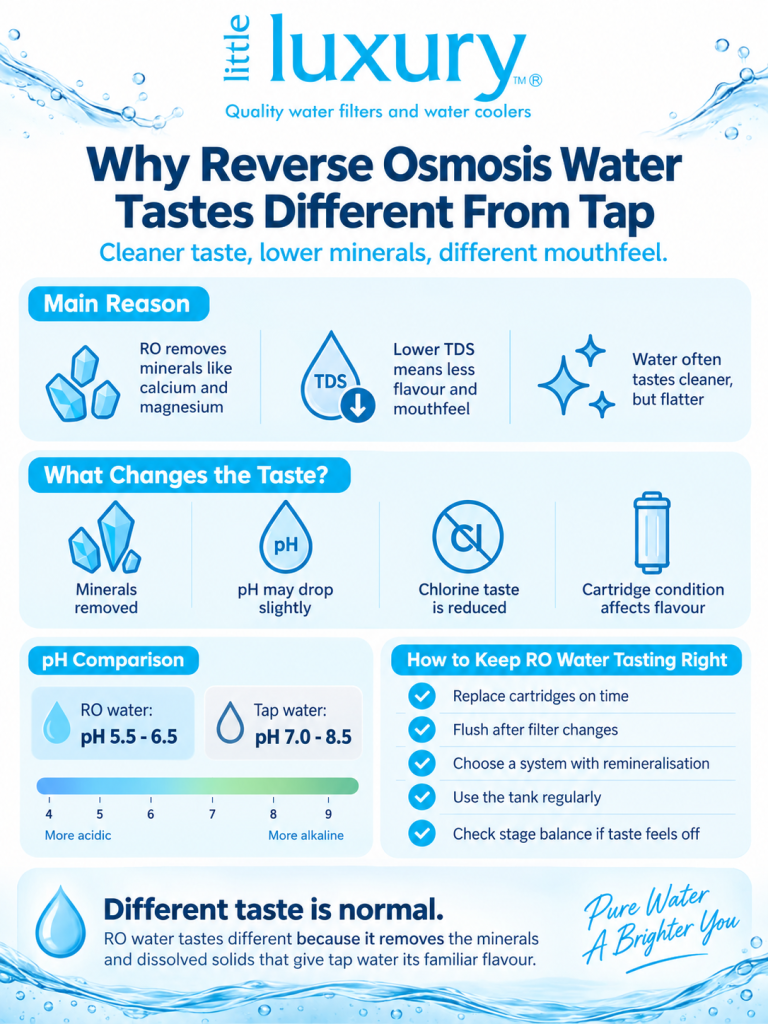
Customers across Sandton and the wider Johannesburg area ask the same question every week, why does reverse osmosis water taste different from tap? The real reason is that RO filtration strips out minerals that give tap water its familiar, rounded flavour, along with the contaminants it is designed to remove.
Municipal tap water carries minerals plus trace dissolved solids that shape its taste. Pass that water through a water filter built around an RO membrane, and TDS drops far lower, which is why RO water often tastes cleaner but less expressive. People describe it as flat or less spring like, a change that is rarely a safety concern. More Gauteng households now choose an under sink reverse osmosis water filter system for daily kitchen use, though convenience does not change the chemistry.
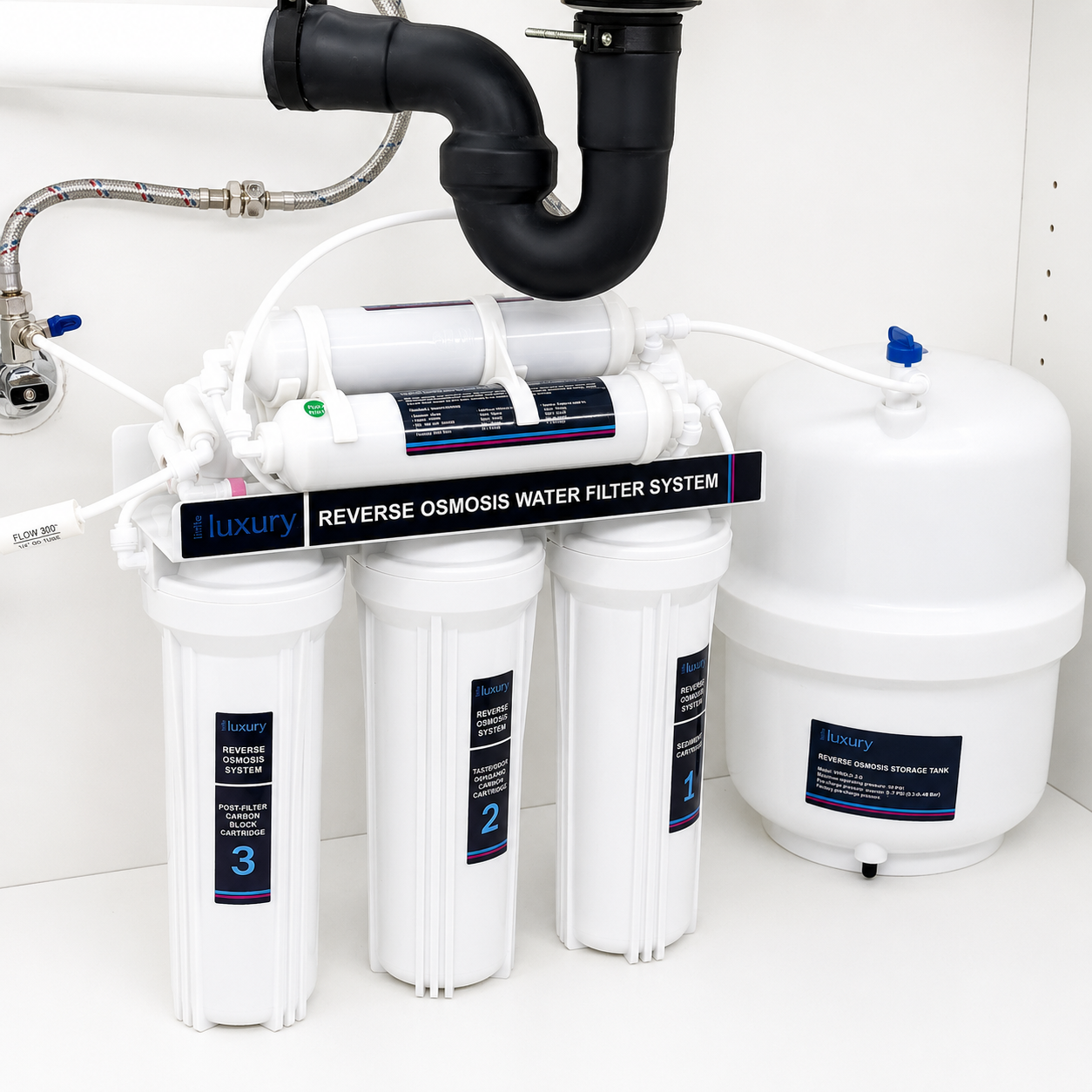
Little Luxury Water Filters carries under sink reverse osmosis units, countertop filters, and replacement cartridges for every RO stage. Compare current pricing in our water filter prices in South Africa guide before you buy.
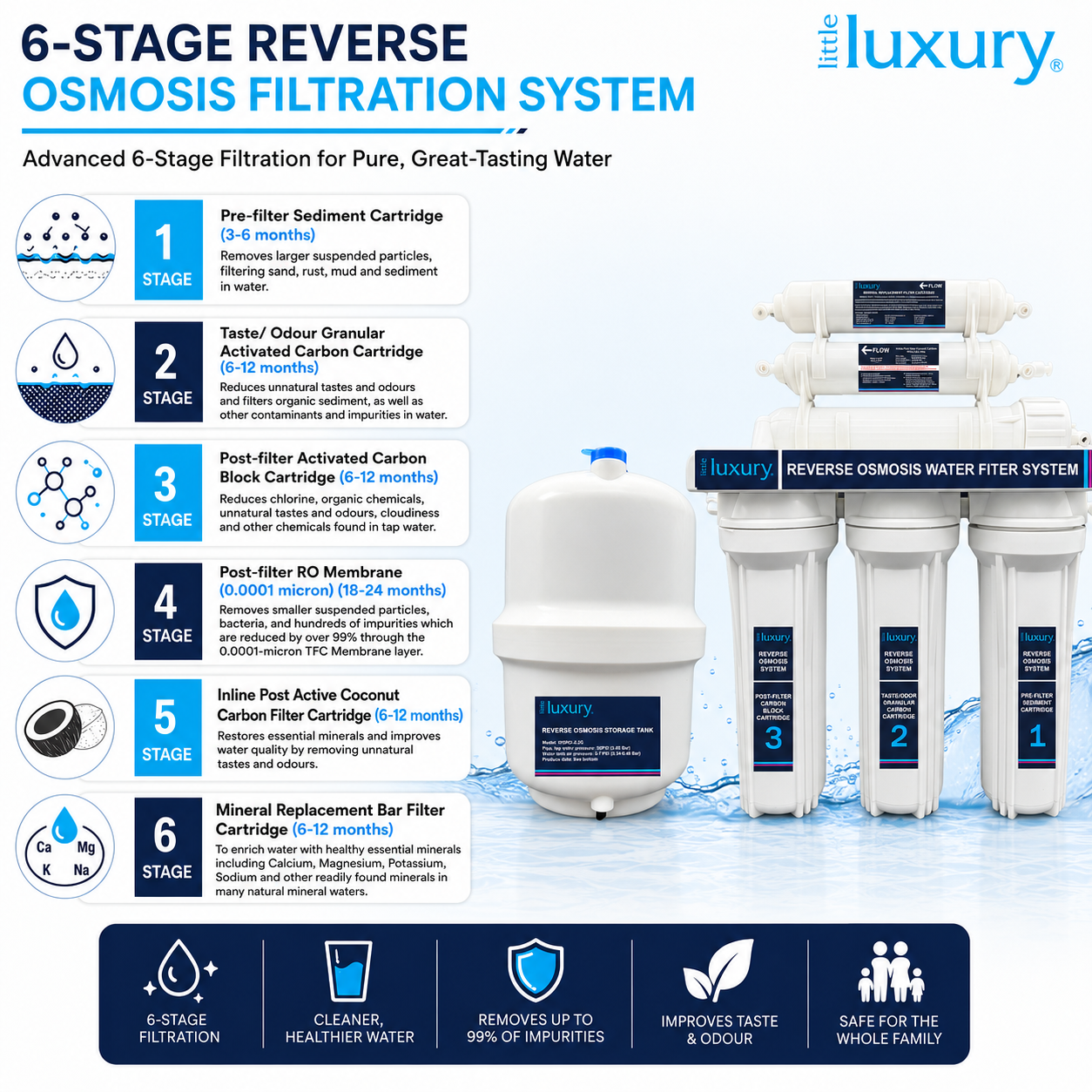
Reverse osmosis water filters work because the membrane inside has pores so fine that it rejects almost everything larger than a water molecule, including minerals such as calcium, magnesium, and potassium, along with fluoride, bacteria, and heavy metals where present. That is why the taste changes so noticeably.
One of the most common descriptions we hear is that reverse osmosis water "tastes flat". That sensation connects directly to low TDS, since minerals create a sweetness like sensation and a fuller mouthfeel. When a system removes dissolved solids down to single digit or low double digit ppm levels, the water can feel less lively than tap water. Multi-stage systems help, because taste focused stages after the membrane are built to handle this exact issue.

Another part of the real reason comes down to pH. Without minerals to buffer the water, RO water often becomes slightly acidic, and some people notice a faint sour or metallic edge. For households running a top rated reverse osmosis water filtration system daily, this shift is noticeable within the first few weeks. If your water tastes off right after installation, do not assume the membrane has failed, it is often a normal effect of low mineral content where the system has no remineralisation stage.
Chlorine plays a part too. Most municipal supply areas use free chlorine for disinfection, and RO filtration stages typically reduce that taste, so the water feels cleaner straight away. But you have still removed minerals that gave tap water its baseline flavour, so the change happens for two reasons at once.
Little Luxury Water Filters focuses on 6-stage filtration because a full chain manages taste and contaminants together, not membrane separation alone. Taste planning should form part of any under sink system purchase.

An under sink system with a 12-litre pre-pressurised tank, removing up to 99% of contaminants across six stages while restoring minerals at the final stage.
View Product – R1,999.00
A complete set of all six cartridges, keeping filtration performance and taste consistent for great tasting water.
View Product – R999.00You can also find this cartridge set through Takealot or Makro if you prefer a marketplace.
Sometimes the real reason is not simply that RO is different, it is maintenance and stage setup. Choosing a system means thinking beyond contaminant removal and asking how it will affect taste after the membrane stage.
If your household is weighing up filtration options more broadly, our guide on how to filter all the water in your house compares whole-home filtration against a single system.
The real reason reverse osmosis water tastes different from tap is that filtration removes minerals and solids that give tap water its flavour and buffering, while lowering pH slightly and reducing chlorine taste. A reverse osmosis system remains a strong choice for consistent drinking water, provided you choose one with multiple filtration stages and plan for timely replacement cartridges.
Yes. Reverse osmosis filtration removes minerals and lowers TDS, reducing the flavour and mouthfeel of tap water. Many households describe the result as cleaner, but flatter.
RO water can taste flat because the process reduces dissolved solids to single-digit or low double-digit ppm levels, removing mineral sweetness. If your system includes remineralisation, taste usually settles once usage stabilises.
Usually yes, and in a helpful way. Tap water can taste chemical because of free chlorine, and RO filters reduce that taste. Even so, RO water can still taste different due to its low mineral profile.
It can. RO water often sits around a pH of 5.5 to 6.5, and without minerals to buffer it, some people notice a faint sour or metallic edge. If unpleasant, check cartridge age and taste balancing stages.
It is worth it when the system is built for drinking taste rather than contaminant removal alone. Once remineralisation and every stage are working correctly, RO water becomes easy to drink daily.
Replace cartridges according to the service life set for your system. Waiting too long lets the filtration stages underperform, and taste shifts before the membrane fails outright.
Start with correct flushing after any filter change and replace cartridges on time. If taste still feels off, check stage balance and remineralisation.