Even treated municipal tap water can contain substances that affect taste, odour, and overall water quality. Filtering your tap water helps improve taste, reduce unwanted impurities, and provide convenient access to cleaner drinking water at home or in the office.
Water Quality and Filtration in South Africa
Water quality in South Africa can vary depending on region, municipal infrastructure, and borehole conditions. While treated municipal water generally meets regulatory standards, households may still choose to install a water filter in South Africa to improve taste, reduce sediment, or manage mineral content.
For homes using borehole supply, a borehole water filter or whole house water filter system may be recommended to address higher mineral levels and sediment. In urban apartments and residential estates, compact drinking water filters and under sink water filters are often preferred for daily use.
Selecting the best water filter for home use in South Africa depends on water source, household size, and installation preference rather than a single universal solution.
Better Taste & Improved Water Quality
Municipal water is treated to meet safety standards, but treatment processes often leave behind chlorine and other substances that can affect taste and smell.
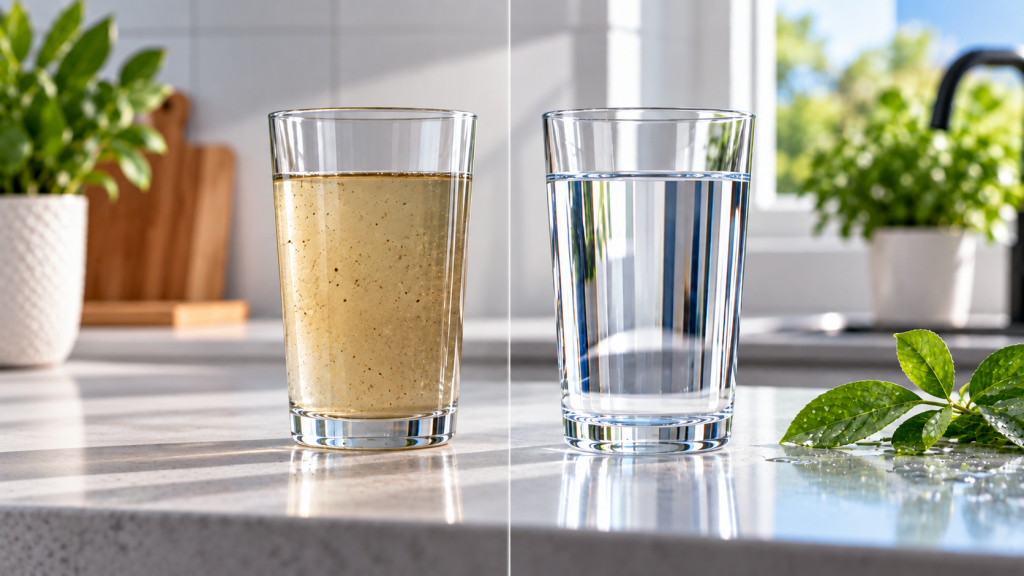
Water filtration systems commonly use activated carbon and multi-stage technologies to help reduce chlorine, sediment, and other impurities that may impact flavour and clarity.
The result is cleaner-tasting water that is more enjoyable to drink and cook with.
Reducing Common Impurities
Depending on the type of system used, water filters can help reduce a range of common impurities found in tap water. These may include chlorine, sediment, certain heavy metals, and other substances that affect water clarity and taste.
Advanced systems such as multi-stage filters and reverse osmosis units may provide broader contaminant reduction where mineral content or specific water quality concerns exist.
It is important to choose a filtration system suited to your local water conditions and to replace filters according to the recommended schedule to maintain performance.
Cost Savings Compared to Bottled Water
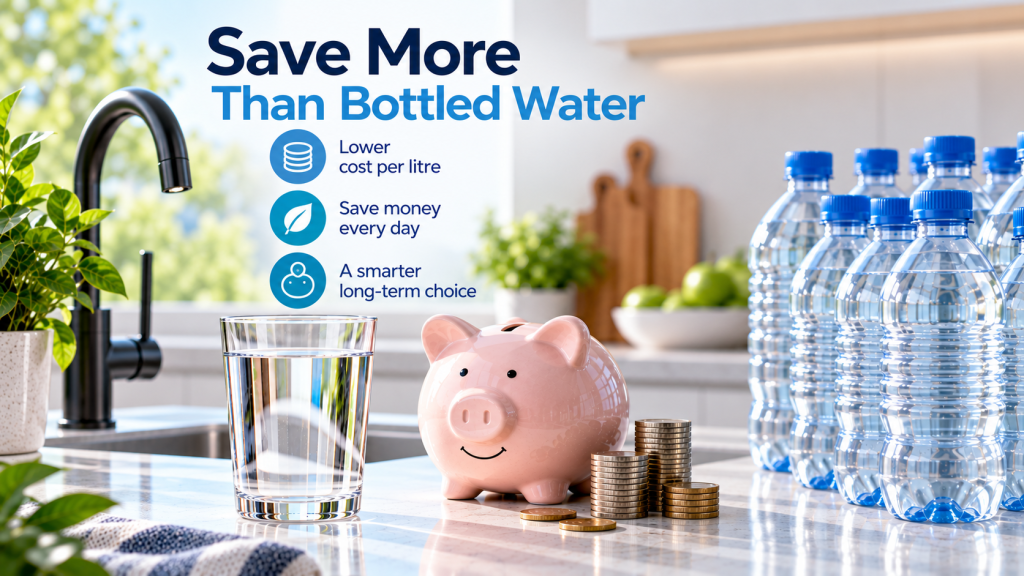
Many households turn to bottled water for convenience or taste, but the ongoing cost can add up quickly over time.
Filtering tap water at home is typically far more cost-effective on a per-litre basis. While there is an upfront cost for a filtration system and periodic replacement cartridges, the long-term cost of filtered tap water is usually significantly lower than purchasing bottled water regularly.
In addition to cost savings, filtering tap water reduces the need for transporting and storing bottled water, making it a more practical long-term solution for everyday drinking.
Reduced Plastic Waste & Environmental Impact
Switching from bottled water to a home filtration system can significantly reduce single-use plastic consumption.
Bottled water requires plastic production, transportation, and disposal, all of which contribute to environmental impact. Filtering tap water at home reduces reliance on single-use bottles and supports a more sustainable long-term approach to everyday hydration.
By choosing filtration, households can lower plastic waste while maintaining convenient access to clean drinking water.
Choosing the Right Filtration System
The best water filtration system depends on your water source, household size, and installation preference.
For detailed comparisons between tap-mounted filters, countertop systems, and reverse osmosis units, explore our Buying Guides.
If you need help with installation, maintenance, or troubleshooting, visit our Support FAQ page.
Choosing the Best Water Filter Brand in South Africa
When selecting the best water filter brand in South Africa, households should evaluate system flexibility, availability of replacement cartridges, suitability for municipal or borehole water, and long-term maintenance costs. Brands that offer multiple system types – including tap-mounted filters, under sink systems, reverse osmosis units, and whole house filtration – provide greater adaptability as household needs change.