
South Africa water losses have reached alarming levels, with nearly half of all treated water never reaching consumers. Recent national water assessments show that approximately 47.3% of treated water is lost through leaking infrastructure, ageing pipelines, theft, inaccurate metering and operational inefficiencies. These losses place additional pressure on an already water-scarce country and highlight the importance of improving infrastructure, conserving water and preparing households for potential supply disruptions.
Water is one of South Africa’s most valuable resources, yet a significant portion of the country’s treated water never reaches homes, businesses, schools, or hospitals.
Recent findings from the Department of Water and Sanitation’s Green Drop, Blue Drop, and No Drop assessments revealed that national non-revenue water levels have reached approximately 47.3%. In practical terms, this means that nearly one out of every two litres of treated water is lost before it can be used by consumers.
Non-revenue water refers to treated water that is produced but does not generate income for municipalities because it is lost, stolen, unmetered, or inaccurately measured.
The scale of these losses raises serious concerns about South Africa’s long-term water security and the sustainability of municipal water systems.

A significant portion of water losses occurs through physical leaks in ageing infrastructure.
Many municipal water networks consist of ageing pipes, valves, reservoirs, and pumping systems that have deteriorated over time. When maintenance is delayed or repairs are not completed quickly, substantial volumes of treated water can be lost every day.
Not all non-revenue water is caused by physical leaks.
Water can also be lost through:
These issues make it difficult for municipalities to accurately track water usage and recover operating costs.
In some areas, water losses are linked to broader operational challenges, including:
Together, these factors contribute to a growing national water management challenge.
South Africa is classified as a water-scarce country. Rainfall levels are relatively low compared to the global average, and demand for water continues to grow due to population growth, urbanisation, and economic development.
When treated water is lost, additional water must be extracted, treated, and distributed to compensate for these losses, placing further strain on rivers, dams, and water treatment facilities.
Treating water requires significant investment in infrastructure, electricity, chemicals, and labour.
When almost half of treated water is lost before reaching consumers, municipalities face increased operating costs while collecting less revenue, making it more difficult to fund maintenance and infrastructure upgrades.
Water losses can contribute to:
Many South Africans have already experienced temporary water outages in recent years, highlighting the need for more resilient water systems.
While large-scale infrastructure improvements require government and municipal action, households can still play an important role in reducing water waste.
A dripping tap or leaking toilet may seem minor, but even small leaks can waste thousands of litres of water over time.
Regularly inspect:
Addressing leaks early can significantly reduce unnecessary water consumption.
Simple water-saving habits can make a meaningful difference:
Small changes across millions of households can result in substantial national savings.
Unexpected water disruptions can occur due to infrastructure failures, maintenance work, or local supply challenges.
Maintaining an emergency supply of drinking water can help households remain prepared during temporary outages.
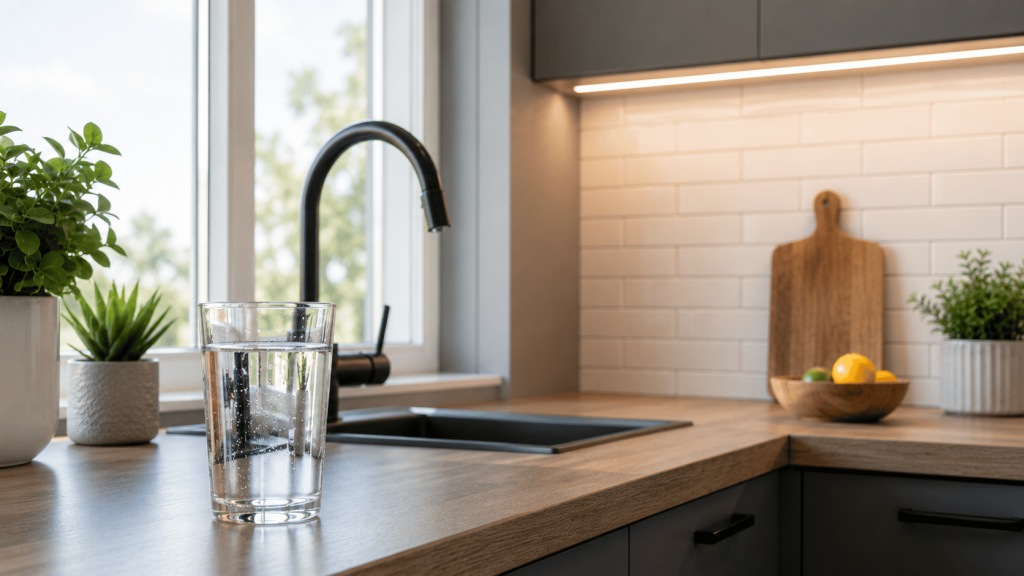
A home water filtration system does not reduce municipal water losses, but it can help households make better use of the water available to them.
Many South Africans choose water filtration systems because they can:
Water filtration can form part of a broader household water preparedness strategy, particularly in areas where water quality concerns or supply interruptions occur.
Some regions of South Africa have demonstrated that water losses can be reduced through proper planning, maintenance, and investment.
The Western Cape has often been highlighted for stronger water management practices and improved conservation initiatives. While challenges still exist, these examples show that meaningful improvements are possible when infrastructure maintenance, monitoring, and conservation programmes are prioritised.
Reducing water losses is not a quick fix, but long-term investment and effective management can significantly improve water security.
The revelation that nearly half of South Africa’s treated water is being lost before reaching consumers serves as a reminder that water cannot be taken for granted.
Addressing the problem will require cooperation between government, municipalities, businesses, and households. Infrastructure upgrades, improved maintenance, stronger conservation efforts, and responsible water use all have a role to play.
As water pressures continue to grow, protecting every litre becomes increasingly important for the country’s future.
Looking to learn more about water quality, water conservation, and filtration?
You may find these resources useful:
This article references reporting published by Pretoria News in the article “South Africa’s water crisis: Nearly half of treated water wasted” by Lilita Gcwabe, published on 31 March 2026.
The report discusses South Africa’s high levels of non-revenue water, including water losses caused by leaks, theft, billing failures, ageing infrastructure and municipal operational challenges. It also refers to findings from the Department of Water and Sanitation’s Green Drop, Blue Drop and No Drop assessments, which highlight the impact of water losses on infrastructure, municipal finances and long-term water security.
Original article: https://pretorianews.co.za/news/2026-03-31-south-africas-water-crisis-nearly-half-of-treated-water-wasted/
