

Hard water is a common issue in many parts of South Africa and can affect the taste of drinking water, cause limescale build-up, and reduce the lifespan of household appliances.
This guide explains what hard water is, how it impacts drinking water, and compares the different types of water filtration systems available to help reduce hard water effects for homes and small offices.
For a broader overview of water quality and filtration options across South Africa, see our Water Filtration in South Africa: Complete Guide.
The best water filter for hard water in South Africa depends on how severe the hardness is and whether the goal is to improve taste, reduce limescale, or protect appliances.
For drinking water, systems that use carbon filtration combined with scale-reducing media or reverse osmosis are commonly recommended, as they can help improve taste and reduce hardness-related minerals without requiring whole-house installation.
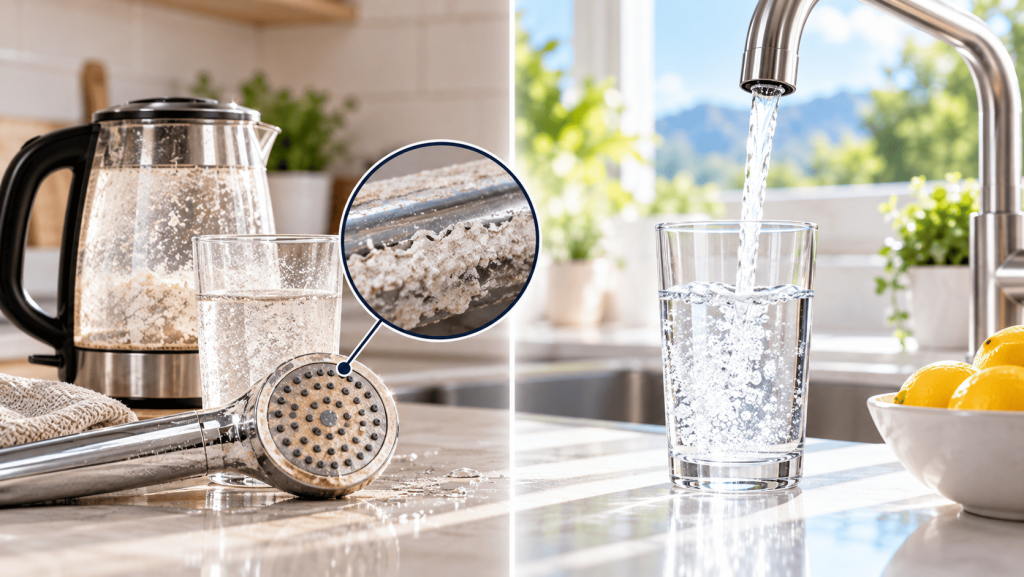
Hard water contains higher levels of dissolved minerals, primarily calcium and magnesium. These minerals are not generally harmful to health, but they can affect the taste of drinking water and cause limescale build-up in kettles, coffee machines, and plumbing over time.
In many areas of South Africa, hard water can also reduce the effectiveness and lifespan of appliances that use water, making filtration or treatment a practical consideration for households concerned about taste, scaling, and maintenance.
| Filter type | How it helps with hard water | Pros | Limitations |
|---|---|---|---|
| Filter jugs | Improve taste by reducing chlorine and some minerals | Low cost, simple, no installation | Limited hardness reduction, no scale protection |
| Tap-mounted filters | Reduce taste and odour issues at point of use | Convenient, affordable | Limited effectiveness for high hardness |
| Countertop filters | Improve taste and reduce scale-related effects | No plumbing, higher capacity | Do not fully remove hardness minerals |
| Reverse osmosis systems | Remove dissolved minerals including calcium and magnesium | Most effective for hard water | Higher cost, installation required |
The best water filtration option for hard water depends on how severe the hardness is and what the main goal is.
• For mild hard water and taste improvement, filter jugs or tap-mounted filters can be sufficient, especially for drinking water only.
• For moderate hard water, countertop filtration systems can help improve taste and reduce limescale-related issues in kettles and coffee machines without requiring installation.
• For very hard water, or where scale build-up is a persistent problem, reverse osmosis systems are generally the most effective option, as they remove dissolved minerals responsible for hardness.
Choosing the right system involves balancing effectiveness, cost, installation requirements, and daily water usage.
For a broader comparison of filtration types, see our guide on RO vs Countertop vs Tap Water Filters in South Africa.
A range of water filtration products are commonly used in South Africa to address hard water, depending on household needs and water quality.
• Filter jugs, such as those from Brita, are widely used for improving taste but have limited impact on hardness-related minerals.
• Countertop water filtration systems are chosen by users who want better taste and reduced scale effects without plumbing or bottled water.
• Reverse osmosis systems, including under-sink installations, are typically selected for areas with very hard water where mineral removal is a priority.
The most suitable option depends on whether the focus is taste improvement, scale reduction, or more comprehensive mineral removal.
When choosing a water filter for hard water, the most suitable option depends on how severe the hardness is and what the primary concern is.
For households dealing mainly with taste issues and light to moderate limescale, countertop water filtration systems can be a practical solution. These systems improve drinking water quality without installation and are well suited to kitchens, apartments, and small offices.
In cases of very hard water, where mineral build-up is persistent or where maximum reduction of calcium and magnesium is required, under-sink reverse osmosis systems are generally the most effective option for drinking water.
Some households choose to combine approaches, using a countertop or tap-based filter for convenience alongside a more comprehensive system for specific uses.
For readers exploring filtration options for hard water, countertop filtration systems and under-sink reverse osmosis systems are commonly used for drinking water in South African homes. Detailed product specifications can help determine which option is most suitable.
Not all water filters remove hardness completely. Basic filters such as jugs and tap-mounted systems mainly improve taste. Reverse osmosis systems are generally more effective at reducing dissolved minerals like calcium and magnesium that cause hardness.
Hard water is generally not considered unsafe to drink. It contains minerals such as calcium and magnesium, which are not harmful to health. However, it can affect taste and contribute to limescale build-up in appliances.
For very hard water, reverse osmosis systems are typically the most effective option for drinking water, as they remove dissolved minerals responsible for hardness.
Countertop filtration systems can help improve taste and may reduce some scale-related effects, but they do not fully remove hardness minerals in the way reverse osmosis systems do.
WhatsApp Us