
The average person within a household uses 305 liters of water per day in Gauteng. The international average of a person per day is 173 liters per day. As it stands in South Africa there is a water crisis with droughts and immense water loss due to poor work by the municipality to reduce water waste and leaking pipes. So as citizens that can manage water from our households how can we make a difference to this crisis?
If you own a dishwasher by running a full dishwasher will save you 500 liters a week. Dishwashers in general are built to save you 30% of energy and water consumption. However, if you are looking at purchasing a dishwasher in the future it is recommended to purchase an Energy Star-certified dishwasher.
Reduce disposable waste and in turn reduce water needed to water your garden. How you ask, well by creating your own compost for your garden using off cuts of vegetables, fruits, eggshells etc. This will create a rich topsoil that is able to lock in moisture and nourish your garden.
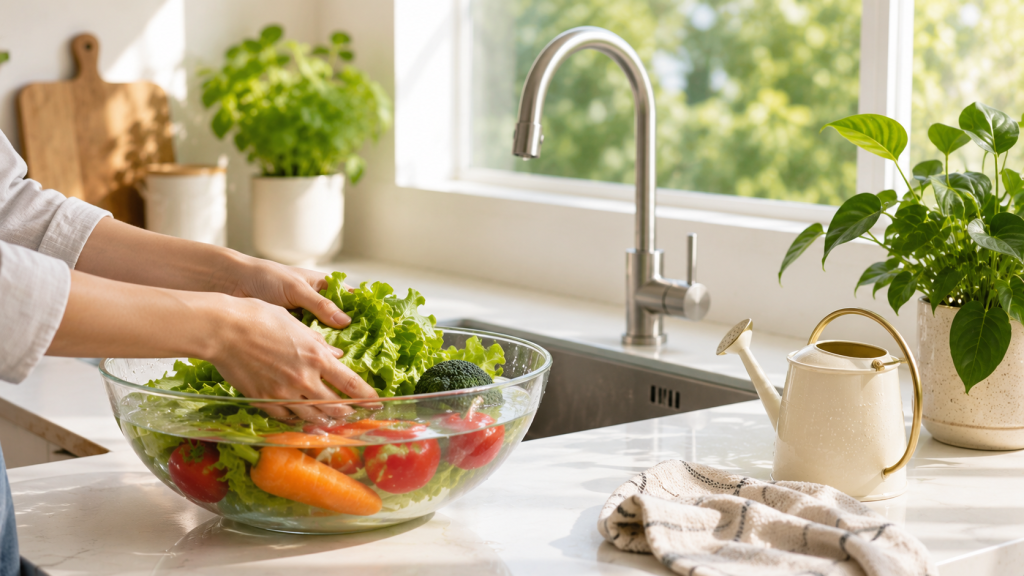
When cooking vegetables opt for steaming your vegetables over boiling. The amount of water needed for steaming is far less than boiling as well as helps maintain the nutrition in the vegetables which is lost in boiling. In addition, the left-over water can be placed aside and used to water any indoor or outdoor plants.
Make it routine to ensure that all your appliances and pipes are not leaking. This does not need to be done daily but needs to become a routine as leaking pipes and appliances result in a large loss of water over time and can be easily avoided by being aware and acting swiftly.
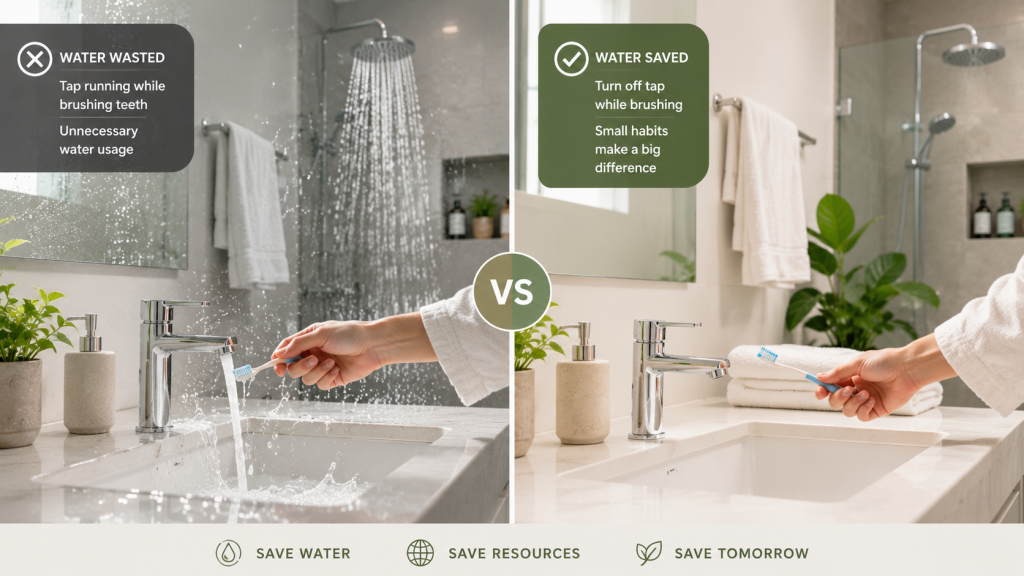
When washing clothing in a washing machine not all washes need to be done on a high temperature. Washing clothes on a high heat reduces the longevity of the clothing as well as uses more electricity in heating the water. Wash your clothing on a cold or warm wash, the electricity used to heat the water requires water in the production of electricity by reducing the electricity and power needed saves water, your clothes and your money.
